


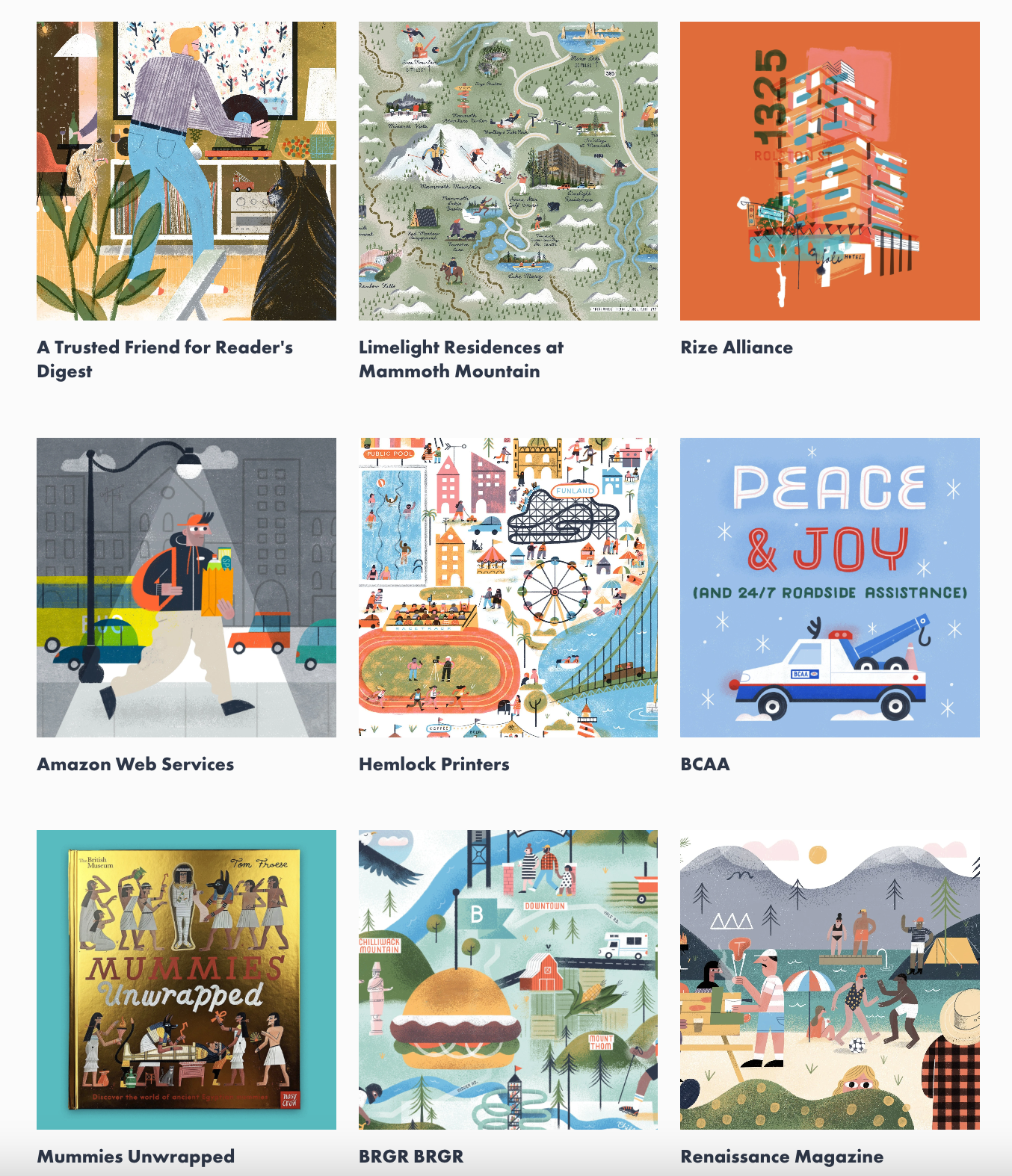
Tom Froese is one of those rare illustrators whose work and ideas seem to ripple far beyond the page. Known for his vibrant, printmaking-inspired aesthetic, he has built an illustration career that blends client work, teaching, writing, and thoughtful commentary on the creative process.
His illustrations have appeared in collaborations with Airbnb, Yahoo, GQ, the Wall Street Journal, and even on a full line of holiday products for Canadian Tire.

Beyond that, he’s taught more than 120,000 students on Skillshare and continues to shape the creative community through his podcast, Thoughts on Illustration.
What makes Tom’s story especially compelling is not just his success, but the clarity with which he reflects on the realities of creative work—the pivots, the plateaus, the business decisions, the emotional cycles, and the honest effort required to develop a meaningful style.
This guide distills key lessons from Tom’s journey: how he navigated a crowded industry, developed a recognizable style, built a multi-stream creative career, and sustained his artistic energy over time.
This piece reflects insights from a live interview with Tom Froese, which you can listen to on our podcast below!
Listen to the full conversation on our podcast, Design Icons, here:
Table of Contents
Illustration Career Path: From Ad World to Top Teacher
Tom began freelancing full-time in 2013 after working as an art director and designer in advertising. His shift to teaching, however, marked a turning point. When Skillshare invited him to create a class, he built Inky Illustrations around the textured, retro-inspired techniques that defined his work at the time.
The response was immediate—students resonated with the hands-on, highly personal approach, and Tom realized he had tapped into something bigger than client projects alone. Teaching not only expanded his reach but strengthened his creative identity.
His career continued to build momentum, culminating in moments that made his practice feel more concrete—like seeing his holiday illustrations turned into gift bags, pillows, wrap, and ornaments at Canadian Tire stores in 2018. For Tom, these physical products were a reminder that illustration is ultimately about making stuff people interact with, not just images on a screen.
Dealing with Plateaus and Hard Moments
Creative careers rarely follow a straight upward line. Tom is candid about the emotional landscape beneath the work—how the natural ebb and flow of mood can influence productivity and confidence. His slowest professional year came recently: in 2023, he had the fewest client projects since his earliest days. Teaching kept him moving; without it, he admits the year would have been “dismal.”
The Sunk Cost Fallacy and Pivoting
A humbling moment came when he focused on building a business channel with YouTube. Despite his audience and teaching experience, the platform just wasn’t gaining traction. He spent unjustifiable amounts of time on videos that only reached a couple hundred viewers. Recognizing the sunk cost fallacy at work, he eventually stepped back and acknowledged that this channel wasn’t coming together quickly enough to keep pursuing it. That realization led him toward something that did align: launching Thoughts on Illustration, now in its fourth season.
Still, Tom points out that 200 people watching something can be a tremendous gift—just not necessarily a viable business model.
Insights Through Reflection
To avoid wandering too far down the wrong path, Tom relies on regular self-review. His annual end-of-year reflections—often shared publicly—act as a personal “state of the union.” These retrospectives allow him to evaluate wins, failures, and lessons learned, giving him a clearer view of what needs to change in the coming year.
When asked what he wishes he had done differently earlier in his career, Tom doesn’t name missed opportunities—he names mindset. He admits he is guilty of relying on the path of least resistance. While he can happily draw all day, he fatigues quickly from over-investing on skills that don’t fit his style.
Looking back, Tom admitted that developing more foundational skills earlier would have accelerated his career growth. But he also values balancing natural strengths with the effort required to push beyond them. He cites Saul Steinberg’s philosophy—“If it doesn’t come easy, it doesn’t come at all”—as inspiring but potentially limiting. For Tom, the work that came “easy” sometimes meant he was unknowingly mimicking others. The harder work was figuring out what he alone could contribute.
Why Style Matters for Getting Hired
The illustration market is saturated. Style isn’t just an artistic choice—it’s a business asset. Tom emphasizes that clients hire illustrators for specificity; you have to be recognizable. Style includes not only how your work looks, but the world it creates, the way it’s applied, and the broader value you bring.
Style as an Illustration Career Strategy
A clear style offers practical advantages:
- Established process for doing the work — You start from a familiar foundation, using tools and processes you know well. This cuts down on guesswork and produces work with more consistency.
- Creative boundaries — By creating guardrails around your process, you protect your time and your work. A strong style helps you push back on unreasonable client revisions, protecting the core of your work.
How to Develop a Style That’s Truly Yours
With illustration becoming more mainstream and competitive, Tom offers grounded advice:
Bring your non-illustration interests into your work.
Style emerges from who you are, not just what brushes you use. Tom’s love for mid-century design shaped his expressive shapes, textured surfaces, and limited palettes. Your own interests—animals, architecture, travel, fashion—can become the source material that makes your work distinct.
Embrace limitations.
Powerful digital tools can create a “limitless” environment that actually weakens consistency. There are simply too many choices and opportunities to stray from the style we want to create. Tom encourages illustrators to narrow their toolset. Pick one tool and one surface for a project, repeat it, and learn what it offers. Style grows from finding range within your constraints, not indulging in an abundance of creative tools.
How to Make Money as an Illustrator: Business Acumen and Pivoting
Tom’s career evolved naturally through following what interested him—illustration, teaching, writing, podcasting—and then paying attention to where momentum grew. External feedback, like student enthusiasm or strong engagement on his written posts, often signaled when a new direction deserved more of his time.
Focusing on Conversions
Tom keeps a clear eye on what actually drives income and impact. Teaching illustration has become a core part of his business. He evaluates new projects by asking whether they support his business foundation, or pull him in a new direction. If an activity doesn’t convert into meaningful work (or it’s draining his creativity), he’s willing to break away from it.
Pricing and Industry Shifts
Tom has become more sophisticated about pricing as his career has progressed. But he also acknowledges the stagnant rates in editorial illustration—rates that haven’t changed since the ’80s. Combined with increased competition and the post-COVID creative surge, he’s careful about where he invests his energy for this reason.
AI as a Business Tool
Tom sees AI as an efficiency booster in administrative tasks. Tools like ChatGPT help him summarize complex contracts and keep track of scattered project communication. They don’t replace his judgment or his artistic craft, but they reduce time spent on pragmatic, day-to-day action items—a crucial benefit for a solo creative.
Increasing Visibility: Underrated Ways to Get Noticed
Visibility remains one of the toughest challenges for illustrators. While social media algorithms favor influencer-like consistency, Tom offers less obvious strategies that have served him well:
- Join a community — Being part of something bigger (like Skillshare was for him) adds credibility and momentum.
- Start as an employee — Agencies teach invaluable soft skills: presenting work, handling clients, managing expectations.
- Mail physical design work — Digital fatigue is a thing. Beautiful, tactile pieces can stand out far more than another Instagram post.
- Reach out with sincerity — A thoughtful message to someone you admire can open doors without feeling transactional.
- Say yes early on — In the beginning, every job builds your portfolio and your skillset. Don’t run yourself down or minimize your value, but it’s also important to understand that one open door may lead to another.
- Collaborate — When multiple people share a project, visibility multiplies. Find other designers and illustrators you can work with on a project. This increases the audience of the project by the degree to which each designer is connected.
- Stay active and visible — Workshops, talks, classes, events—all show that you’re engaged and producing real work. Never underestimate the value of doing interesting things and sharing them.
Sustaining the Creative Journey: Burnout and Defining Success
Burnout, for Tom, isn’t an exception—it’s part of the cycle. The key is recognizing when you’ve overextended and adjusting before resentment sets in.
Non-Art Practices
Physical movement is essential. Running has become his “medicine,” counteracting the sedentary nature of freelance life. Even walking and getting fresh air can reset creative energy.
Learning to Say No
Tom has had to decline promising projects simply because he didn’t have the capacity to give them his best. Saying no protects the long-term health of his creative practice—it’s about preserving the source rather than burning it out.
Redefining Success
For Tom, success means making a living from art—comfortably, sustainably, and with gratitude—even through dips in motivation or income. Failure would be needing to leave the creative field altogether due to poor choices or burnout. The goal is to create something, stay hopeful, and keep getting by as an illustrator.
Final Thoughts and Resources
Tom is currently writing a book, Drawing is Important, a motivational guide to developing a lifelong drawing practice. It explores the emotional, practical, and psychological hurdles that keep people from drawing and offers techniques to make the habit stick. The book will be released in April 2026 and weaves in Tom’s personal journey – you can learn more about it here.
To explore his work and ongoing projects, you can find him on Instagram and on his website, where his classes and resources live.
Frequently Asked Questions (FAQ) About Building an Illustration Career
How do you build an illustration career from scratch?
Tom Froese transitioned from working as an art director in advertising to full-time freelance illustration in 2013. A major turning point came when he began teaching on Skillshare, where his class Inky Illustrations helped him refine his style and reach a global audience. Teaching, client work, writing, and podcasting eventually formed a multi-stream creative business that supported long-term career growth.
Why is illustration style so important for getting hired by clients?
According to Tom Froese, illustration style is not just an aesthetic choice—it’s a business strategy. In a saturated market, clients hire illustrators for specificity and recognizability. A strong, consistent style helps clients immediately understand what you offer, streamlines your creative process, and allows you to set clearer boundaries around revisions and expectations.
How can illustrators develop a unique and recognizable style?
Tom Froese advises illustrators to develop their style by embracing limitations and drawing from personal interests outside of illustration. Rather than endlessly experimenting with tools and brushes, he recommends narrowing your toolset and repeating processes to discover range within constraints. Style emerges from who you are—your influences, interests, and experiences—not just the techniques you use.
What are the biggest challenges illustrators face in their careers?
Common challenges in an illustration career include creative plateaus, inconsistent income, burnout, and oversaturation in the market. Tom Froese openly discusses how even established illustrators experience slow years and self-doubt. He emphasizes reflection, honest evaluation of what’s working, and being willing to pivot away from efforts that aren’t producing meaningful results.
How do illustrators make money beyond client work?
In addition to client projects, illustrators can diversify their income through teaching, online courses, workshops, writing, speaking, licensing, and product collaborations. Tom Froese’s experience shows that teaching illustration can become a reliable income stream while also strengthening creative identity and visibility within the industry.
What role does AI play in a modern illustration business?
Tom Froese views AI as a productivity tool rather than a creative replacement. He uses tools like ChatGPT to summarize contracts, organize project communication, and handle administrative tasks more efficiently. By reducing time spent on non-creative work, illustrators can focus more energy on drawing, thinking, and building their careers intentionally.
How can illustrators increase visibility and get noticed without relying solely on social media?
Tom Froese recommends several underrated strategies for illustrator visibility, including joining creative communities, collaborating with other designers, mailing physical work, attending events, and reaching out sincerely to people you admire. Teaching, speaking, and participating in group projects can often create deeper, longer-lasting visibility than chasing social media algorithms alone.


